Build · 7 min read
When Your Smartphone Listens for Disease: What VoiceMed's Pilot Reveals About AI Diagnostics in Practice
A Rome-based startup just reached €1 million in funding and launched a pilot testing AI that detects respiratory diseases from smartphone voice recordings. The real question isn't whether the technology works—it's whether they can navigate the regulatory maze and health system integration challenges that separate promising algorithms from actual patient care.
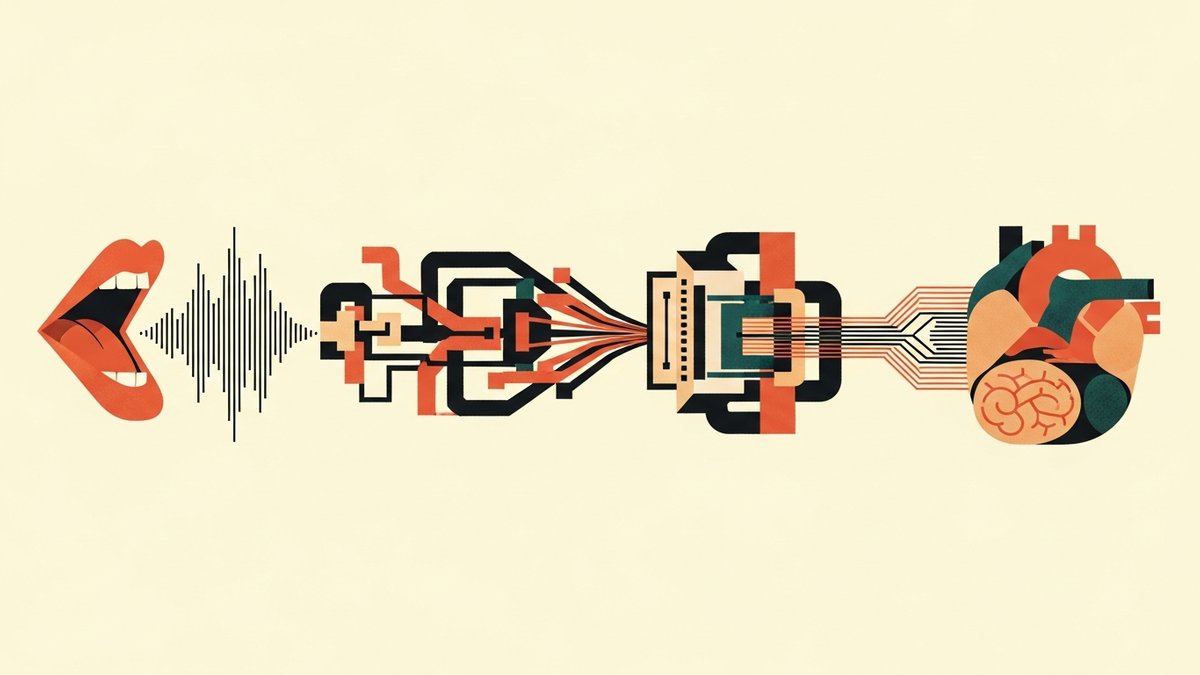
A Rome-based startup just reached €1 million in total funding and launched a pilot with one of Europe's largest pharmaceutical companies. The technology? An AI that analyzes your voice to detect chronic respiratory diseases. The question worth asking isn't whether this works—early evidence suggests it might—but rather: what does it take to move from promising algorithm to actual healthcare intervention?
VoiceMed's announcement, reported by EU-Startups, marks a specific moment in the company's journey: a six-month pilot with Chiesi Group testing smartphone-based vocal biomarkers for early detection of chronic respiratory diseases, with a particular focus on COPD. But the story here isn't just about one startup. It's about what happens when AI-powered diagnostics meet the messy reality of healthcare systems, regulatory frameworks, and the gap between technical capability and clinical utility.
The Problem VoiceMed Is Trying to Solve
Let me be precise about what's at stake. According to Chiesi Group's own analysis, approximately 36 million people in the EU live with COPD, and an estimated 80% of cases go undiagnosed. The European Federation of Allergy and Airways Diseases Patients' Associations reports that underdiagnosis rates range between 70% and 90% across Europe and North America.
Why does this matter? Misdiagnosed patients wait an average of five years for a correct diagnosis, and by then, 75% have moderate to severe COPD. The WHO and European Respiratory Society's 2025 report projects COPD cases will increase by 23% globally by 2050, with regional productivity loss in Europe estimated at $20.7 billion.
The diagnostic bottleneck is real: spirometry—the gold standard test—requires specialized equipment and trained personnel, and is often unavailable in primary care settings. This is where VoiceMed's proposition becomes interesting. According to the company's website, their technology uses acoustic analysis of voice and breath to measure biomarkers for lung health using only a smartphone.
What the Pilot Actually Tests
The VoiceMed-Chiesi pilot, launched in January 2026, is a six-month study testing whether smartphone-based vocal biomarkers can effectively screen for chronic respiratory diseases. This isn't VoiceMed's first clinical validation effort—according to their REACH Incubator profile, they've conducted five clinical studies in European hospitals and accumulated over 5,200 recordings benchmarked with health information.
But here's where I want to disaggregate the claims from the evidence. The science of vocal biomarkers for respiratory conditions is genuinely promising. Research published in the Journal of Medical Internet Research demonstrated that a respiratory-responsive vocal biomarker model could differentiate patients with COVID-19 from healthy volunteers with 73.2% sensitivity and 62.9% specificity. The same model showed generalizability across asthma, COPD, interstitial lung disease, and cough.
Nature's 2025 coverage of vocal biomarker technology notes that researchers at the Luxembourg Institute of Health used AI to detect type 2 diabetes from voice recordings with 71% accuracy in men and 66% in women. The underlying mechanism is plausible: conditions affecting the lungs, vocal cords, or neurological control of speech can create detectable acoustic signatures.
However—and this is crucial—there's a difference between detecting statistical associations in controlled studies and deploying a reliable screening tool in diverse real-world populations. A 2025 paper in Frontiers in Digital Health identifies the core challenges: data scarcity, model generalizability across different populations and recording conditions, and regulatory hurdles.
The Regulatory Landscape: Where AI Meets Medical Devices
This is where the implementation framework becomes genuinely complex. VoiceMed's technology, if used for diagnostic purposes, falls under multiple regulatory regimes simultaneously.
The EU AI Act, which began enforcement in February 2025, classifies AI systems used in medical devices as high-risk when they require notified body involvement for conformity assessment. According to guidance from QuickBird Medical, this means VoiceMed's technology—if it reaches Class IIa or higher under the Medical Device Regulation—automatically becomes a high-risk AI system under the AI Act.
The February 2026 proposals from the European Commission to amend the MDR and IVDR add another layer. These proposals aim to streamline regulatory processes while maintaining safety standards, including adaptive pathways for breakthrough devices and revised classification rules for software.
What does this mean in practice? According to BioT's compliance guide, by August 2027, every AI-powered medical device shipping into the EU must demonstrate simultaneous compliance with both the MDR and the AI Act. The requirements include:
- Rigorous risk management and data governance
- Bias-tested datasets with documented mitigation strategies
- Post-market monitoring with real-time performance tracking
- Technical documentation meeting both MDR Annex II/III and AI Act Annex IV requirements
For a startup with €1 million in total funding, this represents a significant compliance burden. The question isn't whether the technology works in principle—it's whether the company can navigate the regulatory pathway while maintaining the clinical validation evidence that regulators require.
Why Chiesi Makes Sense as a Partner
The partnership with Chiesi Group isn't accidental. Chiesi is an international biopharmaceutical company with deep expertise in respiratory health—according to their corporate materials, respiratory diseases including asthma and COPD are core therapeutic areas. They've previously partnered with Kaia Health on digital therapeutics for COPD and with Aptar Digital Health on disease management platforms.
For VoiceMed, Chiesi provides several things that €1 million in funding cannot easily buy: clinical trial infrastructure, regulatory expertise, patient access, and commercial distribution channels. For Chiesi, VoiceMed represents a potential screening tool that could identify patients earlier in their disease progression—patients who might then benefit from Chiesi's pharmaceutical products.
This alignment of incentives is worth noting without cynicism. Early detection genuinely benefits patients, and pharmaceutical companies have legitimate commercial interests in reaching those patients. The question is whether the technology delivers on its promise.
The Implementation Framework: What Would Success Look Like?
Let me propose a framework for evaluating AI-powered early disease detection implementations like VoiceMed's. This isn't about predicting whether VoiceMed will succeed—I don't have that information—but about identifying the questions that matter.
Clinical Validation: Does the technology perform consistently across diverse populations, recording conditions, and disease stages? The Frontiers in Digital Health review on master protocols for vocal biomarker development emphasizes that lack of standardization in data collection protocols remains a major barrier to clinical adoption.
Regulatory Pathway: Can the company navigate the dual compliance requirements of MDR and AI Act within realistic timelines and budgets? The EUCROF webinar scheduled for February 2026 on this exact topic suggests the industry is still working through these questions.
Health System Integration: Even if the technology works and is approved, how does it fit into existing care pathways? A screening tool is only valuable if positive results lead to appropriate follow-up care. Given that spirometry is often unavailable in primary care, what happens when a smartphone app flags someone as high-risk?
Economic Sustainability: A January 2026 systematic review in npj Primary Care Respiratory Medicine found that while targeted COPD screening strategies are likely cost-effective, considerable heterogeneity in study designs limits direct comparisons. VoiceMed will need to demonstrate not just clinical utility but economic value to payers.
The Broader Pattern
VoiceMed's story fits a pattern I've observed across European AI health startups: promising technology, genuine unmet need, complex regulatory environment, and the challenge of moving from pilot to scale.
The vocal biomarker field is advancing rapidly—2026 predictions include more diseases detectable through voice analysis, integration with telehealth platforms, and enhanced AI algorithms. But the gap between technical capability and healthcare implementation remains substantial.
What makes VoiceMed's pilot worth watching isn't the technology alone—it's the test of whether a European startup can navigate the full implementation pathway: clinical validation, regulatory approval, health system integration, and commercial sustainability. The Chiesi partnership provides resources and expertise, but the fundamental challenges remain.
For policymakers, the VoiceMed case illustrates a tension in European AI governance. The AI Act and MDR create legitimate safeguards for patient safety, but they also create compliance burdens that may favor large incumbents over innovative startups. The EU4Health-funded JARED joint action on chronic respiratory diseases represents one attempt to bridge this gap through coordinated support for early detection initiatives.
For investors and founders, the lesson is that AI health technology requires not just technical excellence but regulatory strategy, clinical partnerships, and health system understanding from the earliest stages.
And for those of us trying to make sense of AI's role in healthcare: the question isn't whether AI can detect disease from voice recordings. The question is whether we can build the institutions, incentives, and implementation frameworks that translate technical capability into patient benefit.
VoiceMed's six-month pilot won't answer all these questions. But it will generate evidence—about clinical performance, regulatory feasibility, and partnership dynamics—that informs the broader conversation about AI-powered diagnostics in European healthcare.
The voice, it turns out, may carry more information than we realized. Whether we can listen effectively is a different question entirely.
Keep the conversation going
Back to the Content Hub

